
Graduate Global Practica Placement
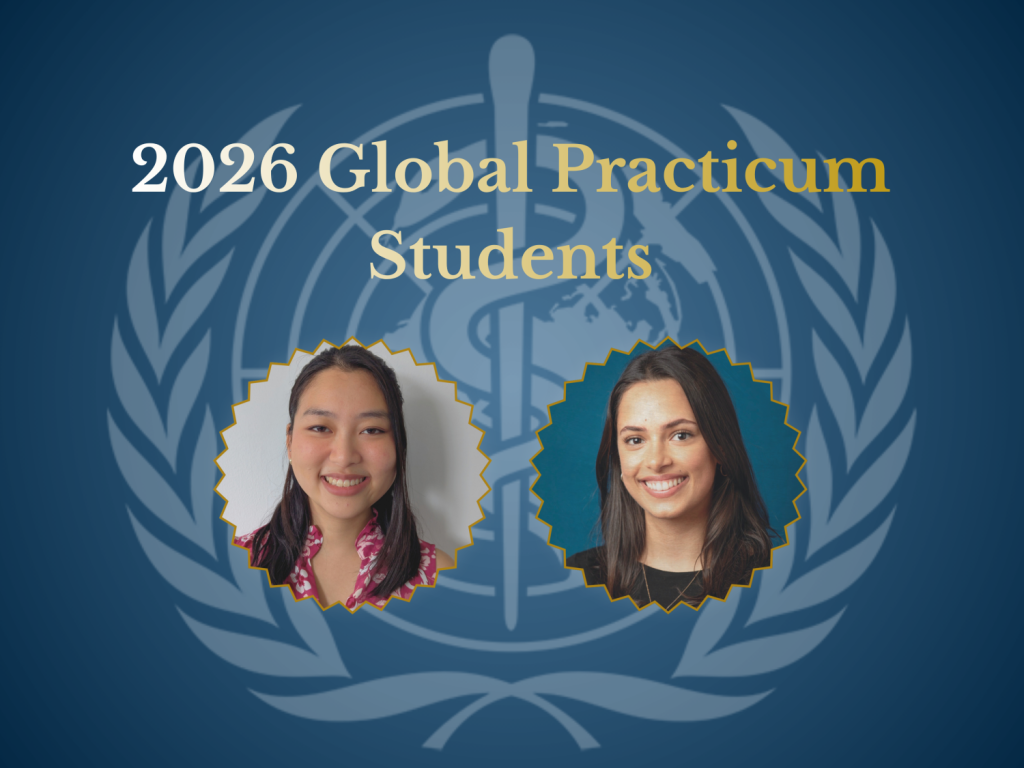
About the Program
The Columbia-WHO Center for Global Mental Health offers a range of practica experiences integrated with the Center’s ongoing research programs. Applicants must be enrolled in a Columbia University graduate program in Public Health, Psychology, Social Work, Medicine, or Dentistry to apply. For any assistance or inquiries, please contact us at info@ccgmh.org.
The following opportunities are available during the 2026 practicum cycle. Priority deadline for applications is Friday, March 20, at 5pm EST. At this time, we are no longer accepting applications. Applicants will be notified of next steps via email in March-April 2026. Any questions can be directed to info@ccgmh.org.
***
Flexible Interview for the ICD-11 (FLII-11)
Faculty Mentor: Dr. Geoffrey Reed
Details: The Flexible Interview for the ICD-11 (FLII-11) is a structured diagnostic interview currently being tested as a tool for use in population-based epidemiological and clinical studies of mental disorders. The World Health Organization has assigned the coordination of this project to our Center. International experts in nosology and psychiatric diagnoses developed the FLII-11 in response to a growing need for open-access diagnostic tools for mental disorders that reflect changes in the International Classification of Diseases. During the ongoing multi-year testing process, collaborating WHO Member States and other research institutions have agreed to use the FLII-11 and participate in its testing before its open-access publication by WHO. Our Center has been providing technical support to partners in 16+ countries participating in testing. Participating countries have expressed a desire for additional resources to help them set up their studies. In order to meet this need, we are interested in publishing a resource packet alongside the FLII-11 to support implementing partners in designing their research methodology. This resource packet will ensure consistency and comparability across sites, aid partners in structuring their studies, and incorporate lessons learned from the testing process to provide guidance on overcoming common implementation challenges. Implementing partners are currently collecting data using a survey housed in Qualtrics and we are interested in developing a version of the survey in REDCap.
Responsibilities: With guidance from the FLII-11 Contributor’s Group, the practicum student will lead the development of a resource packet to accompany the FLII-11, including identifying and compiling appropriate existing resources and developing new resources where needed. This will include resources that provide guidance on conducting pilot testing, determining a sampling strategy, collecting data, and planning analyses. The practicum student will also conduct statistical analyses of population-level data for the countries that are involved in this project. The practicum student will help refine an existing version of the survey in REDCap and evaluate differences between the Qualtrics and REDCap versions.
Deliverables: First product: Resource packet for FLII-11 methodology. Second product: FLII-11 data collection tool
Required Skills: Background in epidemiological research methodology and strong written and verbal communication skills.
Preferred skills: Prior experience with Qualtrics and REDCap.
Duration: May-August 2026
Work modality: Remote
Number of students: 1+ student(s)
***
International Placement
Details: We are open to facilitating opportunities with our international collaborators based in Uganda, Botswana, Mexico, South Africa, Pakistan, Gambia, and Ghana. To let us know about your interest and apply, click on the section heading. We will review your application and be in touch regarding next steps.
For assistance or inquiries, please contact us at info@ccgmh.org.
2025 Practicum Opportunities
The following opportunities are available during the 2025 practicum cycle. Priority deadline for applications is Friday, March 21, at 5pm EST.
Population-Based Assessments of Country Mental Health Status
Details: In collaboration with the Columbia – World Health Organization (WHO) Center for Global Mental Health, WHO has developed the Flexible Interview for ICD-11 (FLII-11), based on the revised diagnostic requirements for mental, behavioral and neurodevelopmental disorders in the Eleventh Revision of the International Classification of Diseases (ICD-11). The FLII-11 is modular, covers common and high-burden mental disorders, and is designed to be administered in epidemiological and other population-based studies by trained lay interviewers. We are coordinating a group of countries around the world who are involved in implementing the FLII-11 in national mental health surveys or other large studies, including China, India, Liberia, South Africa, Mexico, Brazil, Sri Lanka, Tunisia, Georgia, and Pakistan. Other countries are expected to become involved. A part of this effort is devoted to testing of the instrument itself, including assessment of the perspectives of people with lived experience of mental disorders regarding the interview. We are also assembling a range of other measures that can be used together with the FLII-11 depending on the interest of the country (e.g., climate change, migration) and developing protocols and training materials for the FLII-11 and the ICD-11 Clinical Descriptions and Diagnostic Requirements (CDDR).
Responsibilities: Practica students will work on a variety of projects of the Columbia – WHO Center for Global Mental Health, but particularly will work with this network of countries on helping with various aspects of their implementation of the FLII-11 and related instrumentation.
Skills: Level of research skill that allows student(s) to conceptualize concepts and conduct independent research; be able to report back to faculty and team about research projects; have an interest in mental health or a psychology background.
Preferred skills: Spanish, Arabic, and Urdu language abilities are a particular plus.
Duration: Minimum of 10 weeks
In Person/Remote: Hybrid with remote option
Number of students: 1+ student(s)
Faculty Mentors: Dr. Geoffrey Reed
International Site Placement
Details: The Columbia – WHO Center for Global Mental Health offers a range of practicum opportunities with the goal of advancing the research, development, and implementation of mental health instruments and services tailored to the needs of underserved global populations and low- and middle-income countries (LMICs). International placement opportunities through our vast collaborative network extend our work across borders, advancing efforts to investigate and address the global burden of mental health disorders through a multicultural and equity-driven lens. Our international sites include: Botswana, China, Ghana, India, Kenya, Liberia, Mexico, South Africa, and Tanzania. Please note that our international site work will be considered on a case-by-case basis, with deliverables being designed based on both the student’s and site’s interests and needs.
Responsibilities: Practica students will work on a variety of international projects across our network of countries, so student responsibilities will be determined by their site of choice and the site’s needs.
Skills: Level of research skill that allows student(s) to conceptualize concepts and conduct independent research; be able to report back to faculty and team about research projects; have an interest in mental health or a psychology background.
Preferred skills: Other skills (e.g., language) may be required for specific projects.
Duration: Minimum of 10 weeks
In Person/Remote: In person with remote option
Number of students: 1+ students
Faculty Mentors: Dr. Ohemaa Poku