
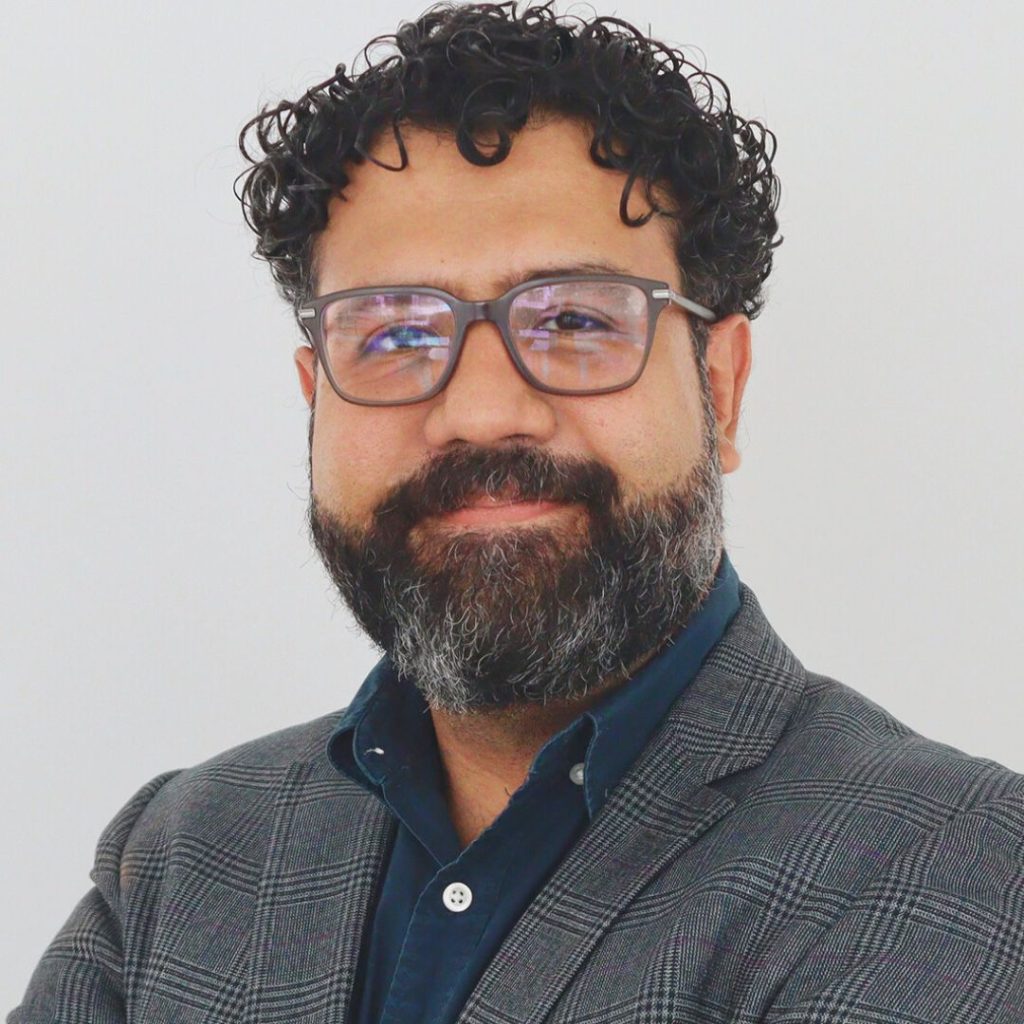
Juan Francisco Flores-Vázquez is a Medical Researcher at the National Institute of Geriatrics (INGER) in Mexico City and a practicing psychiatrist specializing in the clinical diagnosis and care of people living with dementia. His work integrates clinical practice, research, and public health, with a focus on improving the detection, diagnosis, and management of cognitive disorders in aging populations. He holds a PhD in Cognitive Aging and Behavioral Neuroscience from the University of Groningen (The Netherlands), completed in collaboration with the National Autonomous University of Mexico (UNAM), as well as advanced postgraduate training in psychiatry and dementia in Mexico. He has contributed directly to the classification of dementias and related neurocognitive disorders in the ICD-11, including work on diagnostic frameworks and their application in clinical and community settings.
At INGER, Dr. Flores-Vázquez leads research on early cognitive impairment, dementia risk reduction, and cognitive health across the life course, and actively teaches and mentors postgraduate students. He is the Principal Investigator of an implementation science–oriented multidomain intervention to reduce dementia risk in older adults receiving care through IMSS-BIENESTAR in Chiapas, Mexico, bridging research, primary care, and health-system strengthening. His recent publications deal with dementia ethics and stigma, culturally sensitive models of care for Latinx communities, cognitive assessment of early Alzheimer’s disease, and mental health workforce capacity in low- and middle-income countries.
As a collaborator of the CCGMH, he leads the International Spanish cross-cultural adaptation of the Flexible Interview for ICD-11(FLII-11), contributing to global efforts to ensure culturally valid, scalable approaches to mental health diagnosis. His work includes extensive experience in the translation and cultural adaptation of clinical and cognitive assessment instruments, with particular attention to linguistic nuance, cultural meaning, and real-world applicability in diverse and underserved populations.